European Patent Office
The European Patent Office (EPO) examines European patent applications, offering inventors, scientists and companies from all over the world the opportunity to obtain patent protection in up to 44 countries with a single application in a centralised and uniform procedure.
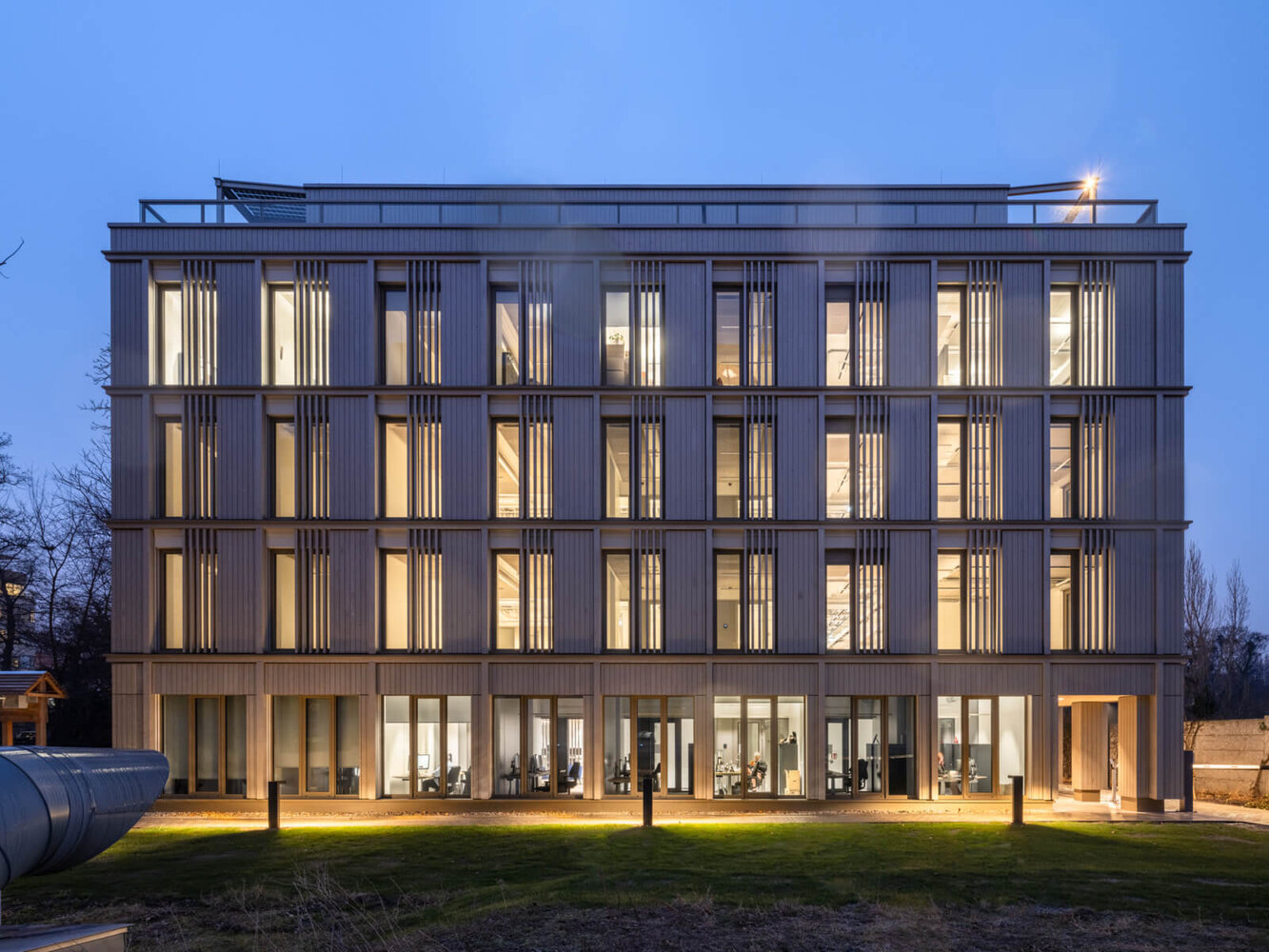
In mid-2023, PORR was commissioned by the European Patent Organisation to renovate its Vienna site. The previous building at Rennweg 12 was completely gutted and replaced with an attractive, climate-positive building.
Client
European Patent Office
pde period of service
11/2022 - 10/2024
Location
Vienna
Service area
BIM, Sustainability
Dimensions
11,645 m² gross floor area; 2 basement floors, 5 upper floors; usable floor space excluding circulation areas and technical areas: 6,731 m²
Service area: BIM
The scope of services related to supporting the construction work during the execution phase.
Three specific BIM use cases were successfully implemented as part of the project:
As-built documentation: Throughout the construction phase, the documentation was continuously updated to reflect the current architectural plans. This ensured that complete and accurate as-built documentation was available at the end of the construction work. All inventory documents were created in accordance with the requirements of ‘ÖN B 1801’, which ensured standardised and traceable documentation.
Quality assurance and collision control: To ensure quality and avoid collisions, data was regularly transmitted to the overall planner or client at least once a month. This data included detailed collision reports and was provided in RVT and IFC formats. This regular transmission ensured high quality and precision in the construction process.
Geometric and alphanumeric data in the BIM models: When the as-built model was handed over, all relevant information was incorporated in accordance with a specified parameter list. Each piece of information was assigned a unique ID to enable clear assignment to the corresponding elements. The final as-built model was delivered at LOD 400 level of detail, ensuring a high degree of accuracy and depth of detail.
![[Translate to English:] Eckansicht des Europäischen Patentamts](/fileadmin/_processed_/0/4/csm_Europaeisches_Patentamt_Eckansicht_72bb12fa23.jpg)
Service area: sustainability
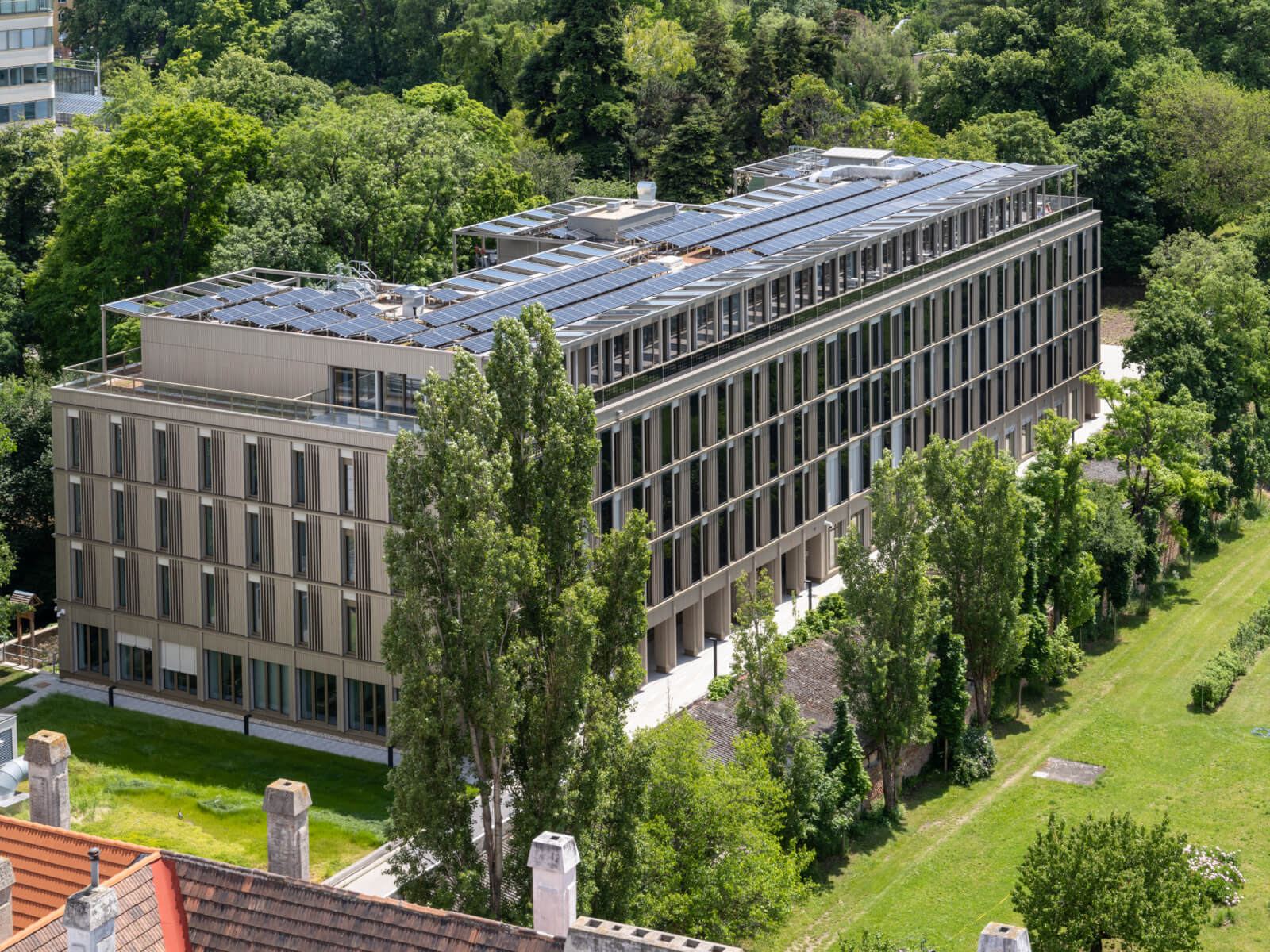
Thanks to its own green electricity generation, the modernised office building produces more energy than it consumes, meaning it is CO₂-negative.
At pde, we are supporting PORR in achieving this CO₂ neutrality and successfully implementing the targeted BREEAM ‘Excellent’ and EMAS requirements.
As part of the EMAS environmental management system, the key environmental aspects during the construction site/construction phase were systematically analysed, including:
- Energy consumption (especially electricity) with the corresponding CO₂ emissions,
- Water and wastewater volumes for the relevant periods,
- Material use (material IN) such as various concrete mixtures with their CO₂ equivalents,
- Material discharge (material OUT) such as construction waste, recycling and landfill waste with positive and negative CO₂ balances.
The emissions were calculated on the basis of specific conversion factors (kg CO₂e per unit) and documented with reference documents (e.g. delivery notes, material recording lists, media consumption records).
The resulting document forms a transparent and comprehensible basis for determining and evaluating the project's carbon footprint and also serves as a central verification and evaluation document within the framework of the EMAS environmental statement.
![[Translate to English:] Terrasse am Europäischen Patentamt](/fileadmin/_processed_/d/0/csm_Europaeisches_Patentamt_Terrasse_ad44d8d6e4.jpg)
CO2 neutrality:
During the planning phase, the entire building was assigned specific CO₂ values for life cycle phases A1–A3, B3, C1–C4 and D in the form of a building component catalogue.
These values were based on reference data for the respective components and formed the basis for a defined emission limit that could not be exceeded by the construction products used.
This enabled the project to successfully achieve the rating ‘CO₂-neutral building’.
After selecting and installing the actual products, savings of around 121,000 kgCO2e were achieved.